Full-Time Equivalent (FTE) Calculator
Enter full-time headcount and non-full-time hours (or a weekly-hours roster). See monthly FTE, the floored average used in ALE sketches, and whether you land at or above 50.
A free tool from Clockspot, employee time tracking for small businesses.
Breakdown
- Full-time employees
- 40
- Part-time / non-FT FTE
- 7.50
- Total FTE (before floor)
- 47.50
- Floored average (ALE sketch)
- 47
How Clockspot fits
Base the next calculation on recorded hours
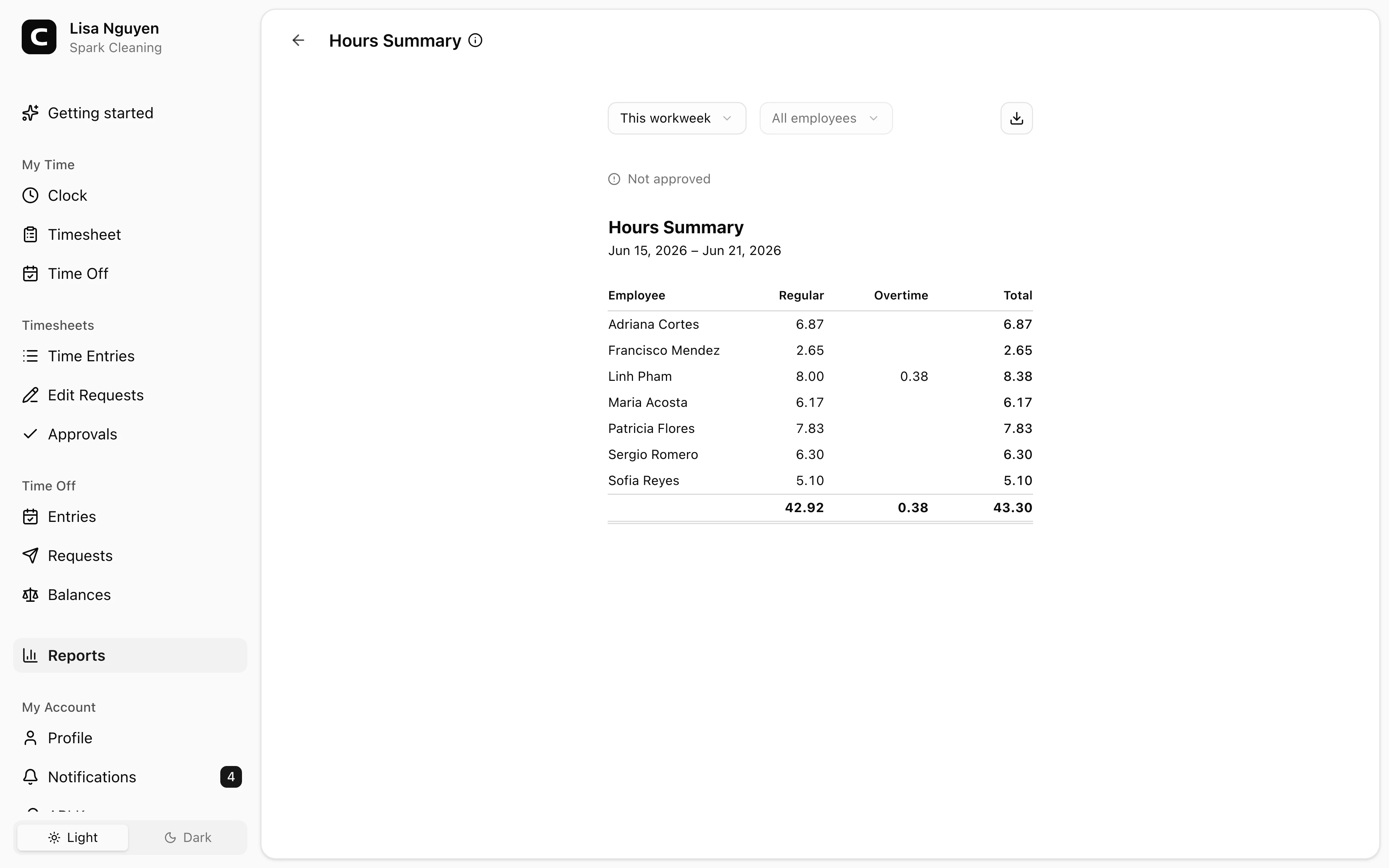
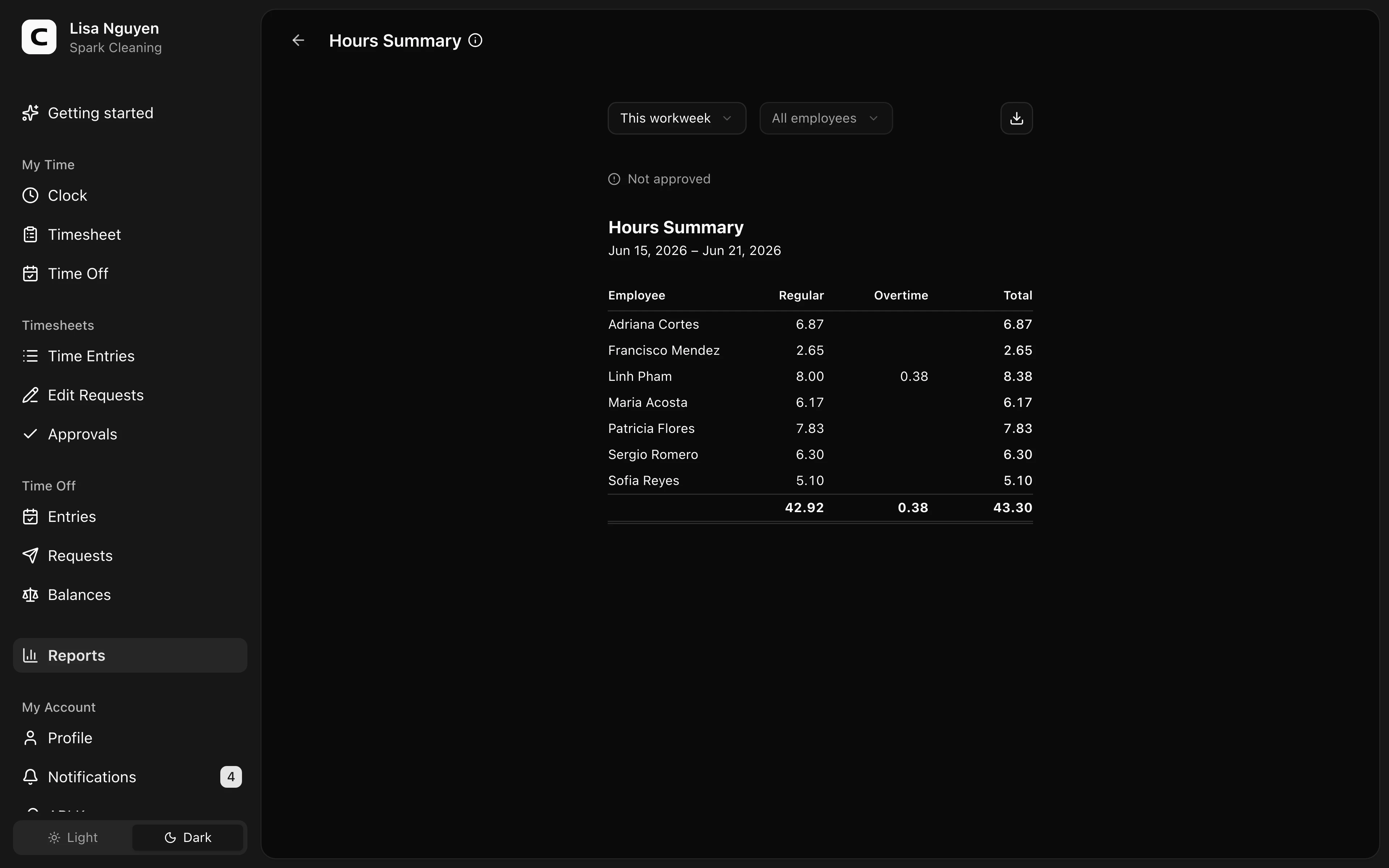
FTE math starts with accurate hours of service. Clockspot helps small businesses capture clock-ins, weekly hours, and approvals so workforce averages rest on real time worked.
Common questions
What is a full-time equivalent (FTE) under the ACA?
For Applicable Large Employer (ALE) size counting, a full-time employee is someone who averages at least 30 hours of service per week in a month (or has at least 130 hours of service in that month). Full-time equivalents are fractions built from employees who are not full-time: add their monthly hours of service (capping each person at 120 hours), then divide by 120. Monthly workforce size for ALE sketches is full-time headcount plus those FTE fractions.
How do I convert part-time hours to FTE?
For one month, total the hours of service of all non-full-time employees (do not count more than 120 hours per person), then divide by 120. Example: 15 part-timers at 60 hours each = 900 hours ÷ 120 = 7.5 FTE for that month. Add full-time headcount to get the monthly total.
What is the 50 FTE ALE threshold?
If an employer averages at least 50 full-time employees including full-time equivalents during the prior calendar year, the employer is generally an Applicable Large Employer for the current year under federal ACA employer shared responsibility and reporting rules. IRS examples floor a fractional annual average to the next lowest whole number before comparing to 50. This calculator’s flag is a simplified sketch—not a legal determination.
Is 40 hours required to count as full-time for ACA FTE?
No. For ALE workforce-size counting, full-time is generally 30 hours of service per week on average during the month, or 130 hours in the month—not a 40-hour schedule. Many employers still schedule 40-hour weeks for operations; that is a different question from the ACA size definition.
Does this include the seasonal worker exception?
No. Federal rules can treat an employer as not exceeding 50 full-time employees (including FTEs) when the workforce exceeds 50 for 120 days or fewer and the employees in excess of 50 during that period are seasonal workers. This tool does not apply that exception automatically. See IRS ALE guidance if seasonality may apply.
Why might my total employees differ from my FTE?
Headcount counts people. FTE for ALE size converts non-full-time hours into fractions of a full-time position. A business can have more than 50 people on payroll and still average under 50 FTE—or fewer full-time staff but still hit 50 after part-time hours are included.
Is this tax or legal advice?
No. Defaults and formulas follow publicly described IRS / HealthCare.gov FTE concepts for education and planning. Controlled-group aggregation, seasonal exceptions, measurement periods for offers of coverage, and state-specific definitions are out of scope. Confirm ALE status with a qualified advisor before compliance decisions.