Employee Payroll Cost Calculator
Enter an hourly rate or annual salary, hours and weeks, employer tax estimates, and monthly benefits to see total annual cost and effective fully loaded hourly cost.
A free tool from Clockspot, employee time tracking for small businesses.
Breakdown
- Annual wages
- $52,000
- Employer FICA (estimate)
- $3,978
- FUTA (estimate)
- $42
- State unemployment (estimate)
- $1,040
- Employer payroll taxes subtotal
- $5,060
- Benefits (annualized)
- $4,800
- Total annual cost
- $61,860
- Effective hourly (fully loaded)
- $29.74/hr
How Clockspot fits
Connect the answer to payroll review
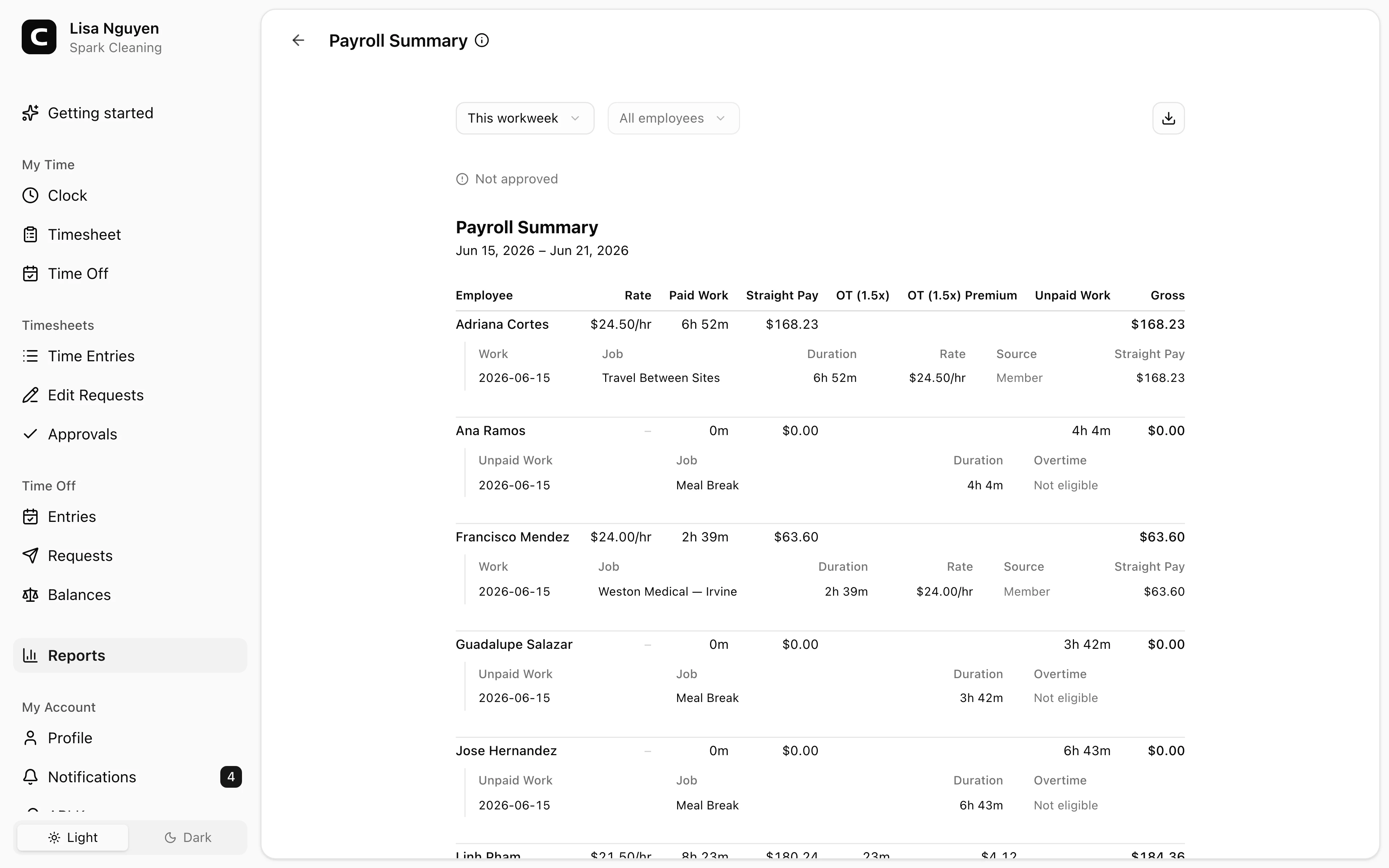
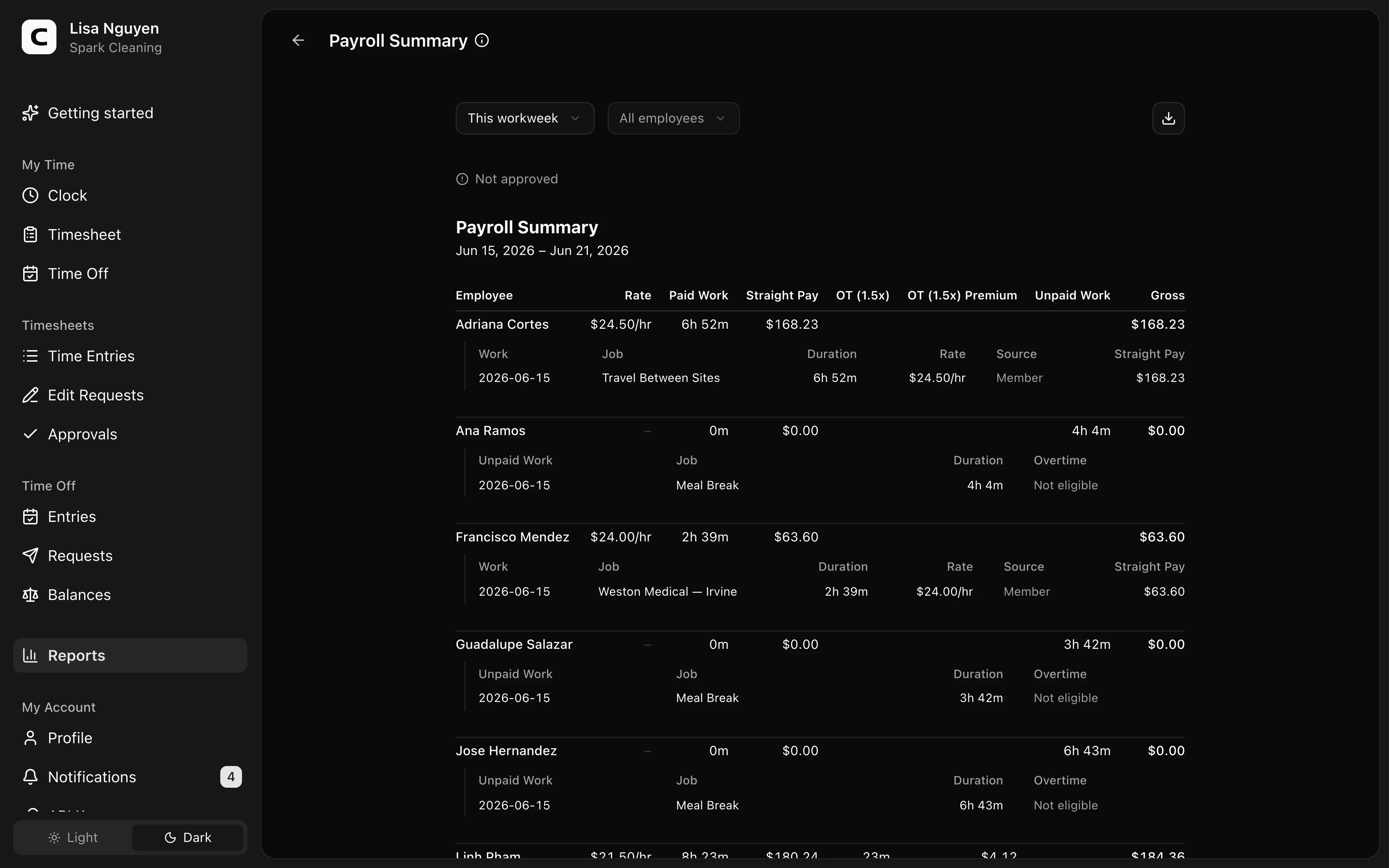
Accurate hours drive accurate labor cost. Clockspot helps small businesses capture clock-ins, breaks, and approvals so payroll cost is based on real worked time.
Common questions
What is fully loaded employee cost?
Fully loaded cost is what the employer pays in total for an employee’s labor over a year — not just wages. This calculator adds annual wages, an employer payroll-tax estimate (FICA by default, plus optional FUTA, state unemployment, and workers’ compensation), annualized benefits, and any other monthly burden you enter. The result is total annual cost and an effective hourly cost over scheduled hours.
What is the employer FICA rate?
The employer share of FICA is 6.2% Social Security plus 1.45% Medicare, or 7.65% combined, under federal law (parallel to the employee share). This calculator defaults to 7.65% and lets you edit the rate. It does not model the Social Security wage base, so very high earners may have a lower actual Social Security tax than the simple percentage implies.
How is FUTA estimated?
Federal unemployment tax (FUTA) is commonly planned at an effective 0.6% rate on the first $7,000 of wages when the employer receives the full 5.4% credit against the 6.0% gross FUTA rate by paying state unemployment taxes on time. That produces about $42 per employee per year at the wage base. Credit-reduction states pay a higher effective rate. The calculator’s FUTA line is optional and simplified.
Why are state unemployment and workers’ comp rates blank or user-entered?
State unemployment insurance (SUI) rates depend on the state, the employer’s experience rating, and often a state-specific taxable wage base. Workers’ compensation premiums depend on classification codes and state systems. A single national default would look precise and be wrong. Enter your known rates as percentages of wages, or leave them at zero to exclude them from the estimate.
How do I convert hourly pay to annual cost?
Annual wages ≈ hourly rate × hours per week × weeks per year. Example: $25 × 40 × 52 = $52,000. Fully loaded cost then adds employer taxes and benefits on top of that wage. The calculator also reports effective fully loaded hourly cost as total annual cost ÷ (hours per week × weeks per year).
Does this include employee-side payroll tax withholding?
No. Fully loaded employer cost is about what the business pays. Employee Social Security, Medicare, federal income tax withholding, and state income tax withholding reduce the employee’s net pay; they are not an additional employer cash outlay beyond the employer FICA and unemployment taxes already listed.
Is this tax advice?
No. Defaults are planning estimates for small-business budgeting. Confirm rates with your payroll provider, state workforce agency, workers’ compensation carrier, or CPA before making hiring or pricing decisions. Local taxes, overtime premiums, bonuses, equity, and multi-state rules are out of scope.
Related tools
Related reading
- Article
Employee Time Tracking App for Small Business: What Matters
Choose an employee time tracking app for small business by checking clock-in workflow, missed punches, approvals, payroll export, records, and mobile fit.
Read article - Article
How to Track Employee Hours for Payroll
Use this payroll-ready time tracking workflow to capture hours, review exceptions, approve edits, and keep records you can explain later.
Read article