Auto repair shops and dealerships often have hourly work spread across the service desk, shop, parts counter, detail, lot, and office.
If employee time is tracked on paper, spreadsheets, or messages, the manager may not see missed punches, department changes, edits, or overtime questions until payroll is already close.
Start with the department record
Before choosing a time clock, decide what the office needs before payroll:
- Who worked.
- When each employee clocked in and out.
- Which department, location, job, or role the time belongs to.
- Whether anyone moved between service, parts, detail, lot, or office work.
- Which punches or times were corrected.
- Who approved the final time.
For the full payroll-ready workflow, read how to track employee hours for payroll.
Department detail should be practical
Some shops only need total hours. Others need hours by department, location, role, repair order, or job.
Do not add fields nobody reviews. But if department or job detail affects manager review, reporting, or payroll handoff, capture it while the shift is happening.
For setup help, read how to track employee hours by job or location.
Explore the sample account
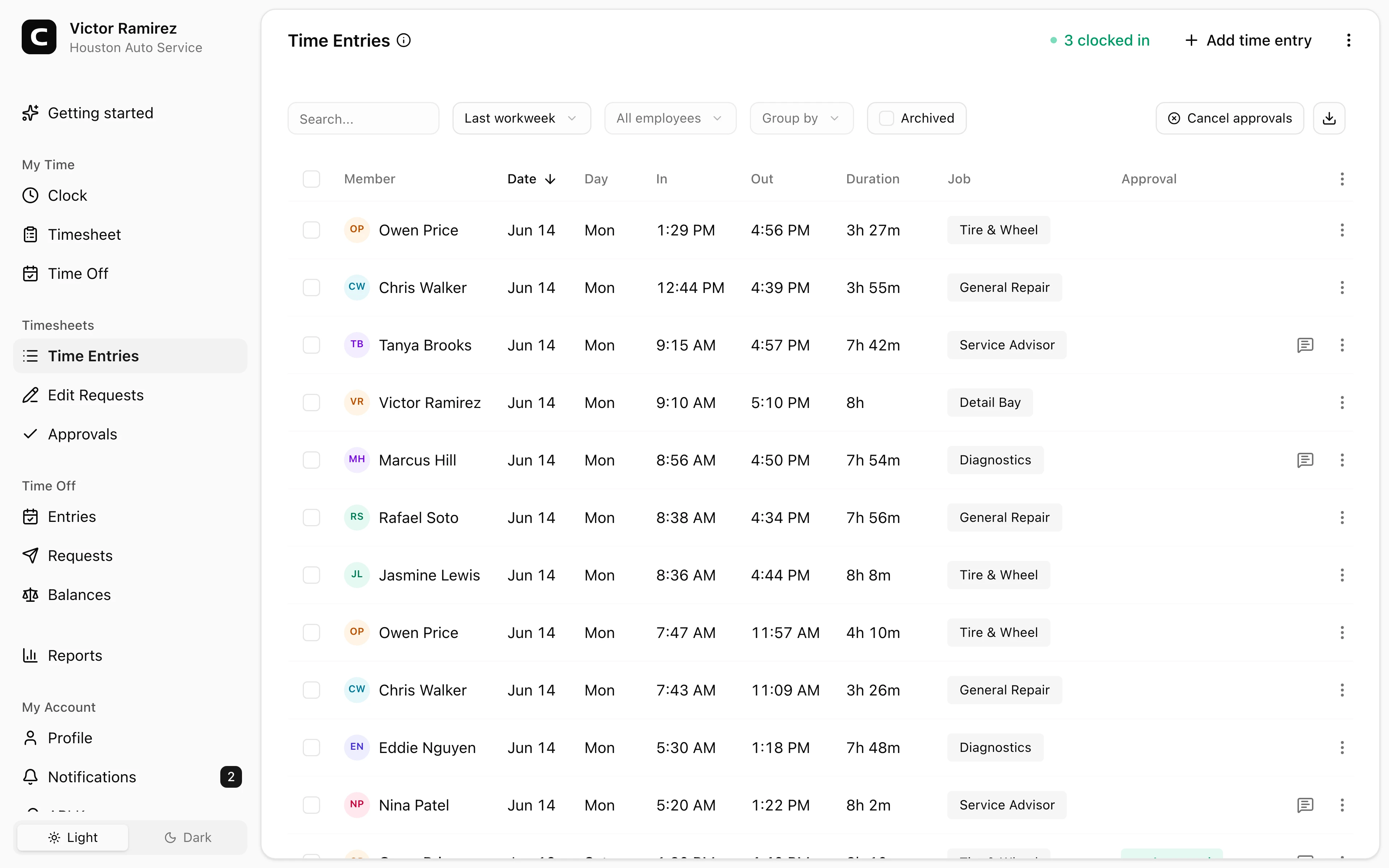
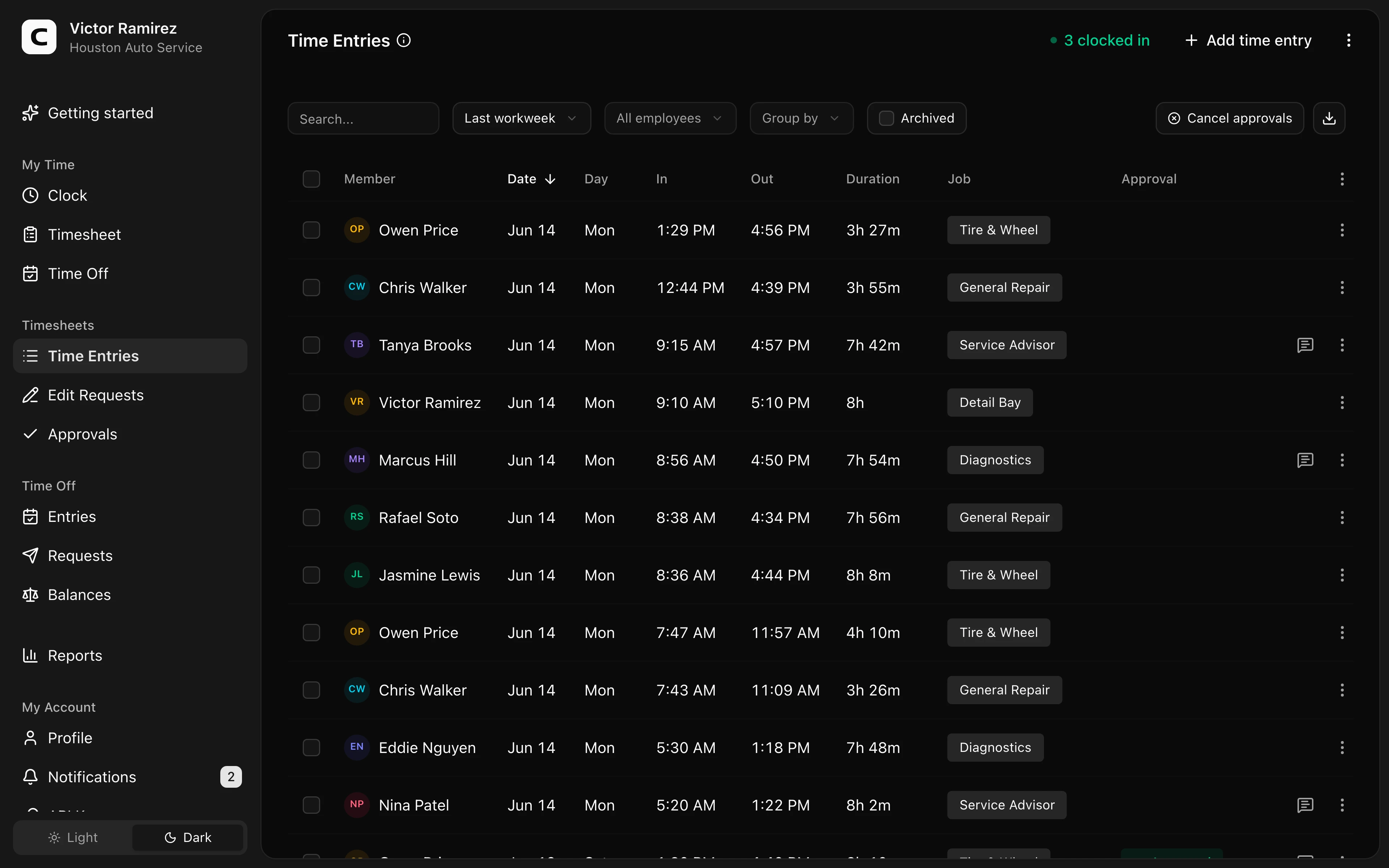
Houston Auto Service is an example auto repair shop in Houston, Texas, with technicians, service bays, ASE and refrigerant qualifications, approvals, and reports already filled in with sample data.
No login required. Opens in one click.
When Clockspot is a good fit
Clockspot is a good fit when an auto repair shop, dealership department, or service business needs focused employee time tracking:
- Employees clock in and out.
- Managers review missed punches, edits, department or location detail, and approvals.
- Approved hours are ready before payroll.
- Time records stay available after the pay period closes.
Clockspot may be a poor fit if you need one system for repair orders, technician flat-rate pay, parts inventory, service scheduling, customer texting, DMS workflows, payroll processing, HR, or accounting.
If this is the workflow you need, see the Clockspot auto repair time clock page, open the demo above, then check Clockspot pricing or start a free trial.
FAQ
What should an auto repair time clock track?
An auto repair time clock should track clock-in and clock-out times, missed punches, corrections, approvals, and department, job, or location detail when that detail helps review.
Should dealerships track time by department?
Yes, when department detail helps managers review hours for service, parts, detail, lot, or office employees. If nobody uses the detail, keep the clock-in workflow simpler.
Does Clockspot replace shop management software?
No. Clockspot tracks employee time and payroll-ready records. Repair orders, parts inventory, service scheduling, DMS workflows, payroll processing, HR, and accounting are separate systems.
The bottom line
An auto service time clock should make employee hours easier to review before payroll.
Choose the app that helps staff record time clearly, helps managers approve corrections and department detail, and keeps the final hours connected to the record behind them.
Clockspot keeps clock-ins, corrections, approvals, and payroll-ready hours connected so owners and managers can review the workweek before payroll.
Clockspot helps auto repair shops and dealership departments keep employee hours, corrections, approvals, and payroll-ready records together. See how Clockspot supports auto service time tracking.