FLSA Exemption Analyzer
Pick an exemption category, enter pay, and answer the duties checklist for a multi-factor screening result — not a legal determination.
A free tool from Clockspot, employee time tracking for small businesses.
Primarily manages the business or a department, directs 2+ employees, and has hiring/firing authority (or particular weight in those recommendations). 29 CFR §541.100 →
- Primary duty is managing the enterprise, or a customarily recognized department or subdivisionTitle alone is not enough — the work has to actually be management.
- Customarily and regularly directs the work of two or more other full-time employees (or their equivalent)
- Has authority to hire or fire, or recommendations on hiring, firing, advancement, or change of status are given particular weight
Screening incomplete — answer pay, salary-basis, and duties questions to get a directional result. Until then, assume non-exempt treatment is safer.
- Category screened: Executive (29 CFR §541.100).
- Primarily manages the business or a department, directs 2+ employees, and has hiring/firing authority (or particular weight in those recommendations).
- Federal white-collar salary floor: $684/week ($35,568/year) under the 2019 Final Rule — operative after the 2024 increase was vacated and rescinded in May 2026.
- Entered pay ≈ $684/week (≈ $35,568/year).
- Salary-screen status: meets the federal pay floor on the inputs provided.
- Duties-screen status: incomplete.
Not legal advice. This analyzer is a multi-factor screening aid only. It does not determine FLSA exemption status. The employer bears the burden of proof. State salary floors may be higher than the federal $684/week threshold. When classification is uncertain, track hours and pay overtime, or get employment counsel.
How Clockspot fits
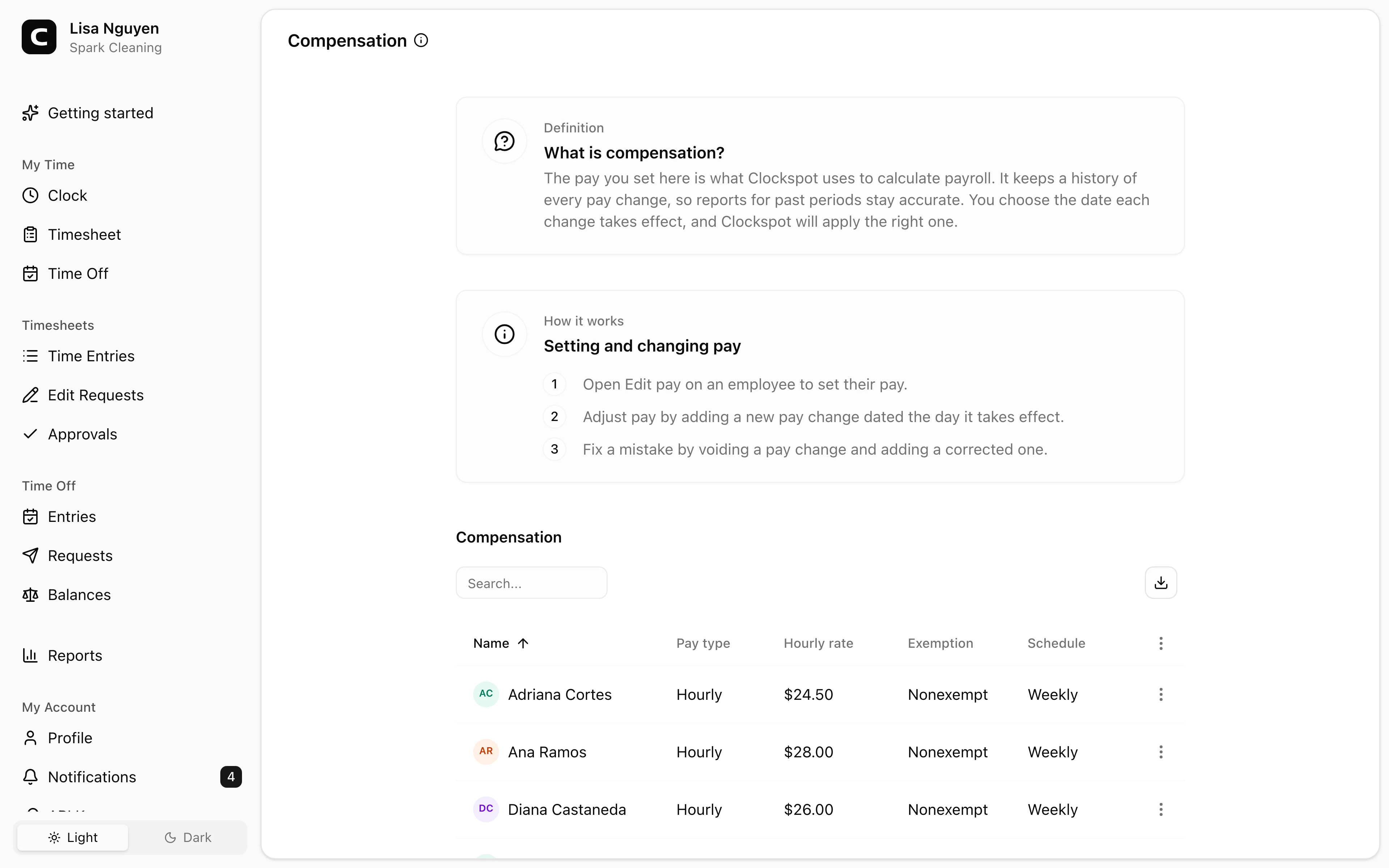
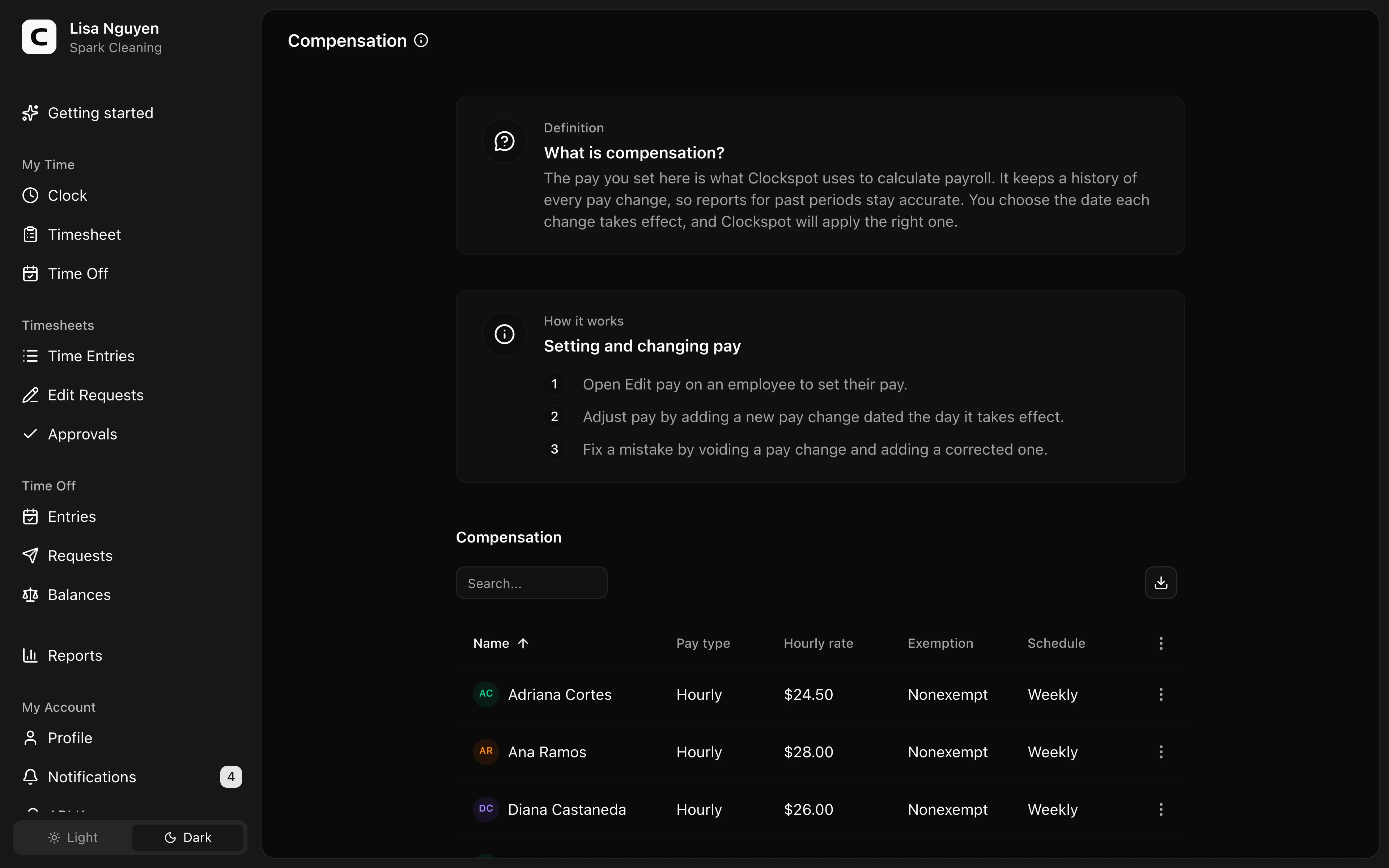
Keep pay details with each employee
Clockspot helps employers track hours for every non-exempt worker — including salaried non-exempt roles — so misclassification does not also become a missing-records problem.
Common questions
Does this tool decide whether an employee is exempt?
No. It is a multi-factor screening aid only. It never issues a legal determination that someone is exempt or non-exempt. The employer bears the burden of proving every element of an FLSA exemption, and state salary floors can exceed the federal threshold.
What is the federal exempt salary threshold right now?
$684 per week ($35,568 per year) under the DOL’s 2019 Final Rule. The 2024 rule that tried to raise the floor to $844 then $1,128 per week was vacated nationwide in State of Texas v. DOL (E.D. Tex. Nov. 15, 2024) and formally rescinded by the DOL on May 14, 2026. The highly compensated employee total annual compensation floor remains $107,432 under the 2019 rule.
Why can a high-paid worker still be non-exempt?
Because exemption requires salary basis and duties, not just high pay. In Helix Energy Solutions Group v. Hewitt (2023), a worker earning over $200,000 on a daily-rate structure was non-exempt because the pay structure failed the salary-basis test. A coordinator paid $50,000 who follows fixed procedures and exercises no independent judgment fails the administrative duties test even if the salary clears $684/week.
How does the computer-employee hourly option work?
Computer employees under 29 CFR §541.400 may qualify with either at least $684/week on a salary basis or at least $27.63/hour. The tool accepts either pay path and still requires a qualifying primary duty (systems analysis, programming, software engineering, or a combination at the same skill level). Ordinary help-desk work usually does not qualify.
Does outside sales require a minimum salary?
Not under federal law. Outside sales under 29 CFR §541.500 has no federal minimum salary. The employee’s primary duty must still be making sales, and the employee must be customarily and regularly engaged away from the employer’s place of business.
Are state exempt salary floors included?
The interactive math is federal. The methodology and result disclaimers note that some states set higher floors — for example California’s exempt threshold at 2× state minimum wage (about $68,640/year at a $16.50 minimum wage in the research snapshot), Washington’s 2.5× minimum wage for larger employers, and Colorado’s $1,057.69/week under COMPS Order 40 for 2025. Confirm the employee’s work-state rules separately.
Related tools
Related reading
- Article
FLSA Exemption Tests: Salary Basis, Duties, and the $684 Floor
How federal FLSA white-collar exemptions work: salary basis, $684/week threshold after the 2024 vacatur, duties tests, HCE, Helix, and the salaried non-exempt trap.
Read article - Article
Salaried Non-Exempt Employees: The Overtime Rules Employers Miss
Learn when salaried non-exempt employees still earn overtime, how to track their hours, and which payroll mistakes to avoid.
Read article - Article
Overtime Rules by State: What Employers Need to Pay
Compare overtime rules by state, including federal overtime, daily overtime, double-time, 7th-day premiums, and common mistakes.
Read article