Final Paycheck Deadline Calculator
Pick the employee's work state and whether they were discharged or quit. See when final pay is due, the statute citation, and what penalty can attach if it's late.
A free tool from Clockspot, employee time tracking for small businesses.
§203: daily wage × calendar days late, capped at 30
How Clockspot fits
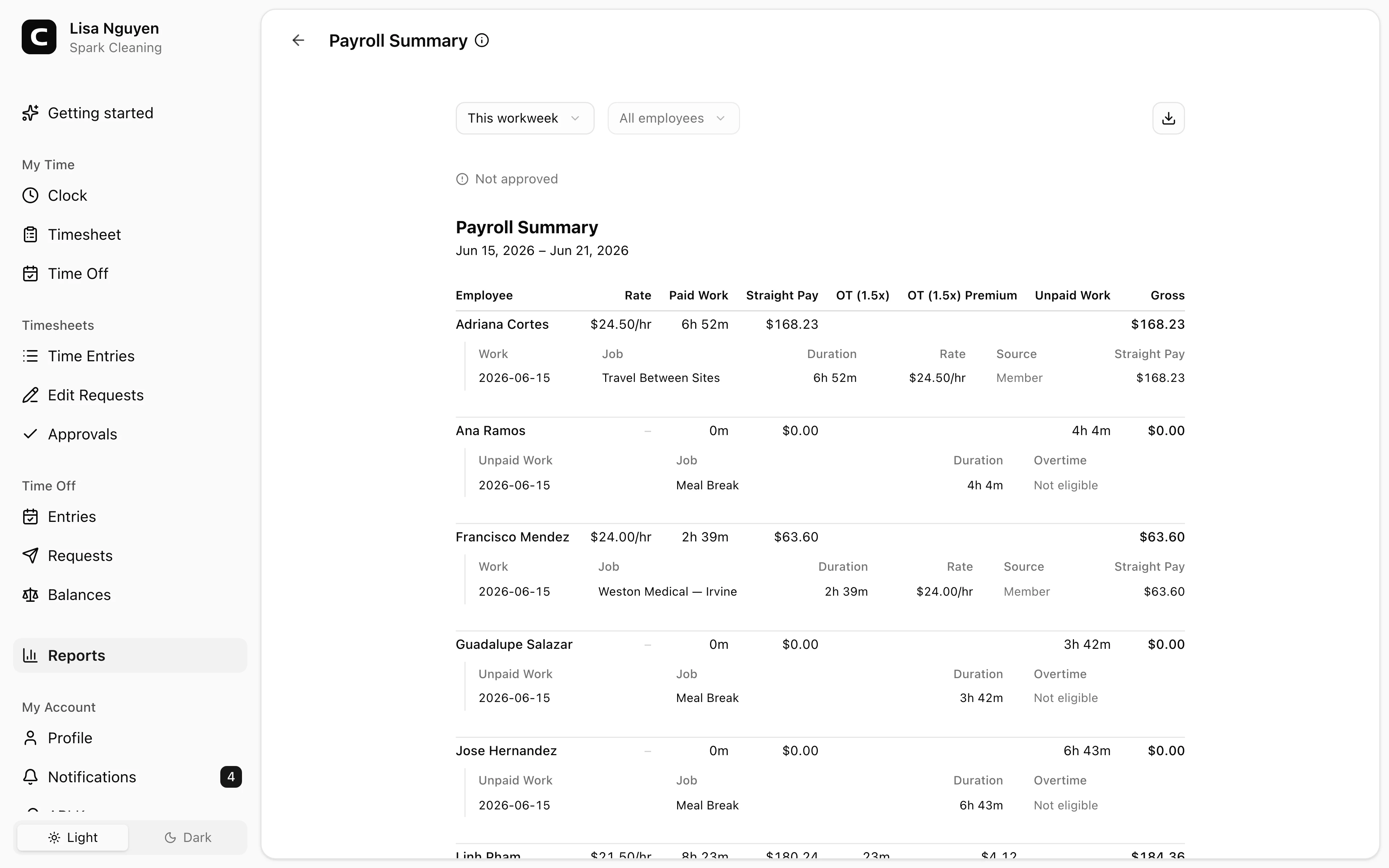
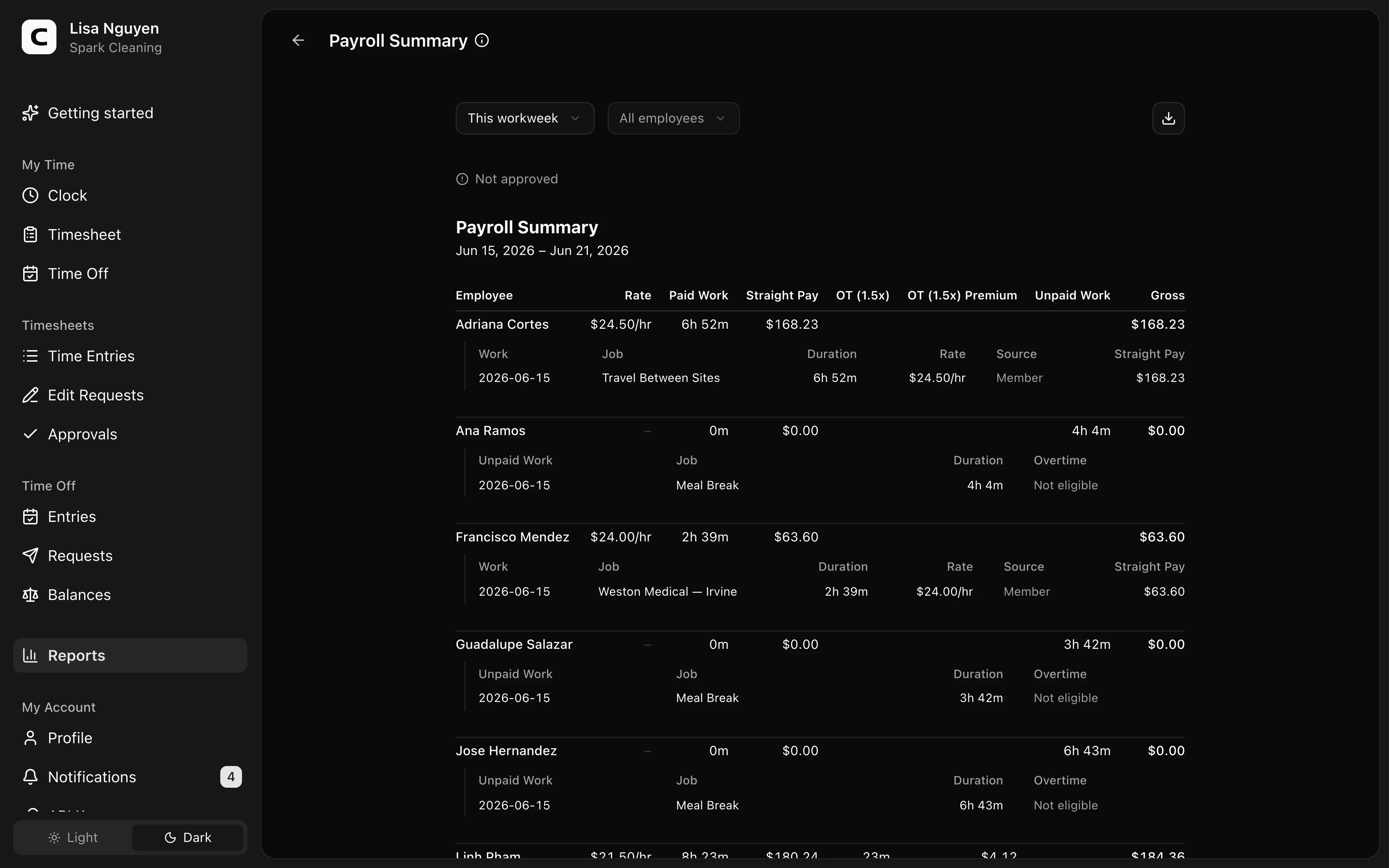
Connect the answer to payroll review
Clockspot keeps hours, overtime, and separation dates organized so payroll can hit the final-paycheck deadline without scrambling for records.
Common questions
When is a final paycheck due after an employee is fired?
It depends on the employee's work state. California, Massachusetts, Missouri, and Nevada generally require same-day or immediate payment on discharge. Texas allows up to 6 days. Many states — Alabama, Florida, New York, Virginia, and others — allow payment on the next regular payday. Use this calculator with "Discharge" selected for the state-specific rule.
Does voluntary quit change the final-pay deadline?
Often yes. Many states give employers more time when the employee quits than when the employer discharges them. California is the classic example: discharge is same-day, but a quit without 72 hours' notice allows 72 hours; with 72+ hours' notice, pay is due the same day. Oregon shortens the quit deadline when the employee gave 48+ hours' notice. Always check both columns for the work state.
Which state should I choose for a remote employee?
Use the employee's work state — where they perform the work. A Texas company with a remote California employee should choose California, because California's final-paycheck timing and waiting-time penalty can apply to that employee. Do not choose the headquarters state unless that is also where the employee works.
What happens if final wages are paid late?
Late final pay can trigger a waiting-time or liquidated-damages penalty on top of the unpaid wages. California Labor Code §203 can add up to 30 days of daily wages. Massachusetts can treble the late amount under MGL c.149 §150 (strict liability after Reuter). Other states use double damages, daily percentages, or civil penalties. When this calculator flags a modeled penalty state, use the linked waiting-time penalty calculator for dollar exposure.
Do California, Oregon, or Hawaii notice rules really change the due date?
Yes. California Labor Code §202: a quit with at least 72 hours' advance notice makes final wages due on the last day of work (same as discharge). Oregon ORS 652.140: 48+ hours' notice makes wages due immediately at quitting; without that notice, the deadline is five days or the next payday, whichever comes first. Hawaii HRS §388-3: one full pay period of notice makes quit pay due the same day; otherwise next regular payday.
Is next regular payday always safe?
No. "Next payday" is common, but same-day, next-business-day, within-N-days, and "whichever first/later" rules are common too. Paying on the next payday when the state requires same-day discharge pay (California, Massachusetts, Nevada, Missouri) can create penalty exposure. Confirm the separation type and any notice the employee gave before locking payroll.
Does this calculator replace reading the statute?
No. It surfaces the research-table rule text and citation for every state so you can act quickly, then confirms against the statute (linked when a URL is available). Collective-bargaining agreements, local ordinances, and industry-specific statutes can impose shorter deadlines. The companion research page has the full state-by-state table and deeper notes.