Workspace setup
Time Tracking Settings
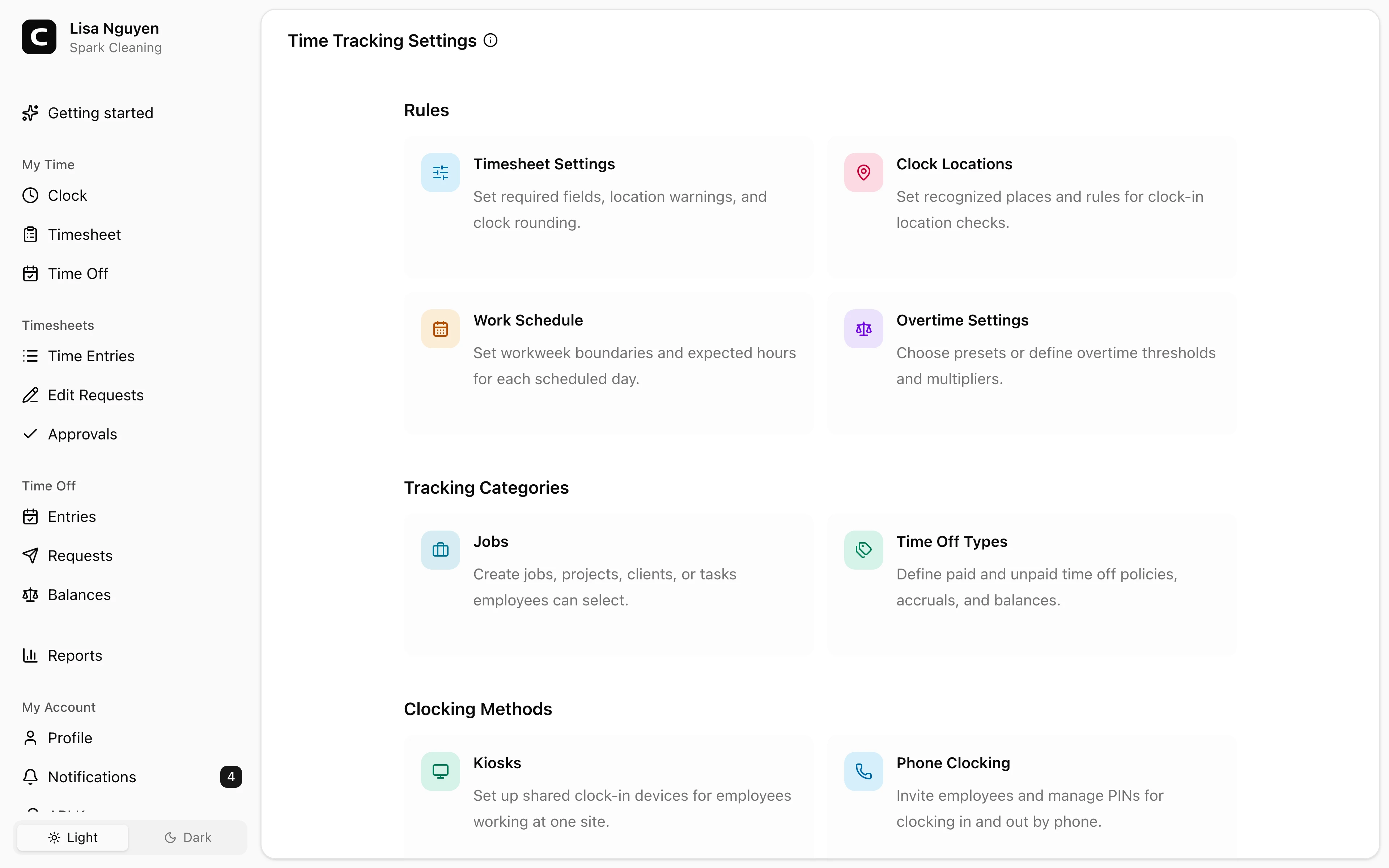
Find the settings that control clock-ins, the workweek, overtime, jobs, time off types, locations, kiosks, and phone clocking.
No login required. Opens in one click.
What this page controls
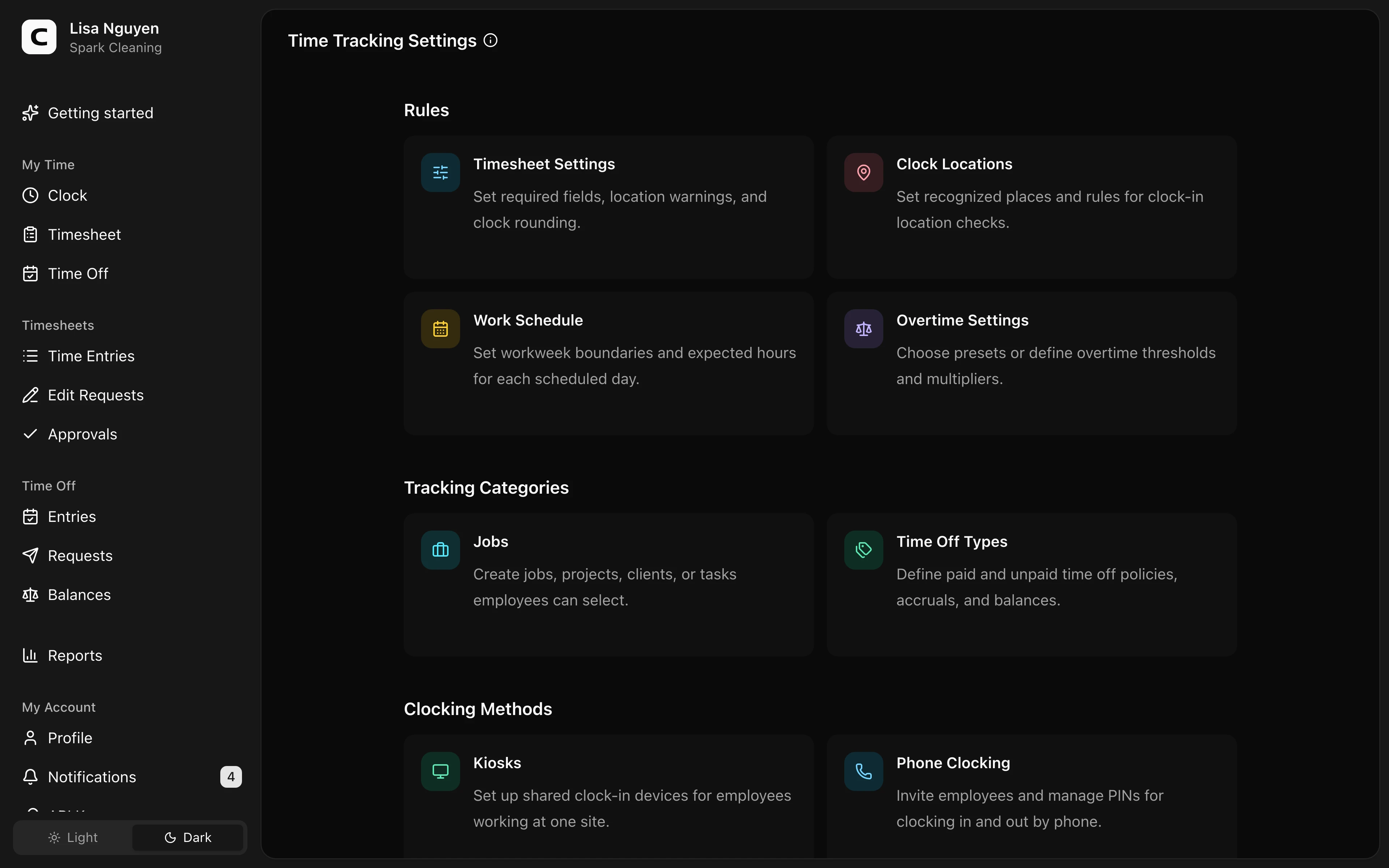
Time Tracking Settings is a directory. Open a card to edit the area you need; there are no settings forms on the directory page itself.
Rules
- Timesheet Settings — configure required job selection, app shift notes, unrecognized clock location warnings, clock-time rounding, and schedule-based clock-in restrictions.
- Clock Locations — the places and rules used to validate clock-in location.
- Overtime Settings — set the Workweek start day, then choose a preset or define overtime rules with a Type, Threshold (hrs), and Multiplier.
Tracking Categories
- Jobs — the jobs, projects, clients, or tasks employees select when recording time.
- Breaks & Lunches — meal and rest break types, whether they are paid, and optional automatic deductions.
- Time Off Types — paid and unpaid time off policies and accrual rules.
Clocking Methods
- Kiosks — shared devices employees use to clock in at one site.
- Phone Clocking — phone-based clock-in setup.
Published shifts on Schedule are the plan for who is expected to work. Employee hire dates live on Employees. Employee and job pay are managed from Compensation and Jobs, not from this directory.
Common questions
- I changed an overtime rule. Will older reports change?
Yes. Overtime reports calculate from the current saved rules for the selected date range, so rerunning an older report can show a different breakdown.
- I want different overtime rules for different employees.
Overtime rules are workspace-wide. For per-employee control, set Exemption in Edit pay on the Compensation page — that excludes the employee from overtime calculation entirely.
- Where do I configure pay rates and pay periods?
Use Compensation for employee pay type, hourly rate, exemption status, and pay schedule. Use Pay on Jobs when a job has its own pay rule.
Related
Employees
Invite employees, edit profile details, and handle owner-only access changes.
Compensation
Set each employee's pay type, hourly rate when applicable, exemption status, and pay schedule, and keep a history of pay changes.
Payroll Export
Create payroll export profiles that map Clockspot hours to your provider's import file format.
Roles & access
Who can see and do what — the difference between employees, admins, and the owner.
Custom fields
Add employee and time-entry fields for the details your workspace needs to track.
Jobs
Group time entries by job, project, client, or task so you can review where hours and labor costs go.
Company
Keep your company name, time zone, and address current.
Timesheet Settings
Set required time-entry details, location warnings, clock-time rounding, clock-in restrictions, and missed-shift alerts.
Overtime Settings
Set the workweek start and the overtime thresholds and multipliers used by Clockspot reports.
API Keys
Connect third-party apps to your Clockspot workspace without sharing your password.